
Essentials that guide mental health support in Australia
Understanding mental health as a continuum, rather than viewing people as simply "well" or "unwell," recognises the diverse experiences and support needs individuals may experience throughout their lives. A person's capacity to cope can fluctuate over time, ranging from optimal functioning and wellbeing to significant distress or crisis.

Career pathways enable mental health professionals to develop the knowledge, skills and specialised expertise required to respond effectively across this continuum. Different pathways equip practitioners to meet different levels of need, ensuring care is tailored to an individual's circumstances and recovery goals. By preparing professionals to provide the right support at the right time, career pathways can enhance a person's functioning, support recovery from periods of distress, and promote long-term wellbeing and thriving.
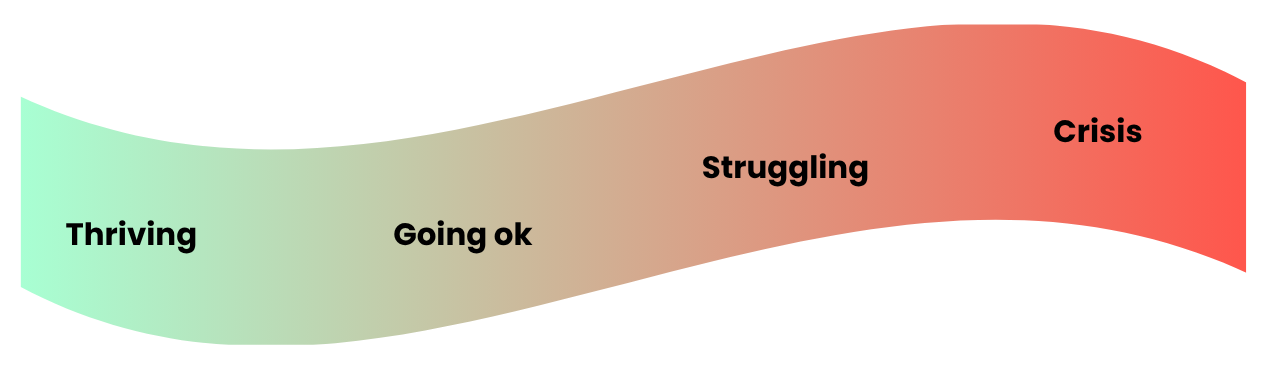
Viewing mental health as a continuum reduces stigma and promotes more personalised care. The spectrum approach also allows mental health professionals to move beyond strict labels and adopt a more holistic view when providing mental health care, which is reflected in their personal career pathway design. Adopting this approach fosters empathy and understanding, making mental health care more inclusive, responsive and effective, leading to individualised care.
How it might look in practice
-
Individualised mental health care customises assessment, treatment, and support to the unique needs and context of each person. It moves away from a one-size-fits-all approach, recognising that effective care depends on understanding the whole person, including their symptoms, experiences, culture, values, and goals.
The Stepped Care Model (SCM) provides a structured framework for delivering personalised support that matches individuals' needs. As circumstances change, services can be adjusted, supported by a skilled workforce. This model has been implemented in various countries, including Australia, emphasising the importance of mental health career pathways that enable clinicians to work flexibly across different levels of care.
-
A comprehensive mental health assessment is a holistic process that explores a person's physical, psychological, social, cultural, spiritual and emotional wellbeing. It includes assessment of symptoms, mental state, risk, physical health, life circumstances, relationships, strengths, supports, and recovery goals. The aim is to understand the person's unique experiences and needs in order to develop an individualised plan that promotes safety, recovery, participation, and wellbeing.
-
Collaborative care planning involves partnering with a person to understand their needs, strengths, goals and preferences, and to make shared decisions about treatment and support. It includes identifying recovery goals, considering available care options, managing risks, coordinating services, involving supports where appropriate, and regularly reviewing progress to ensure care remains responsive to the person's changing needs.
-
Flexible, evidence-based support uses research, clinical expertise and a person's preferences to guide treatment decisions. Ongoing assessment, clinical guidelines, best-practice standards and treatment outcomes help determine whether interventions are effective and when care should be adjusted. This helps ensure the right support is provided at the right time to promote recovery and wellbeing.
-
Culturally safe and trauma-informed care involves providing respectful, inclusive care that recognises the influence of culture, identity, lived experience and trauma on a person's wellbeing. It emphasises trust, choice, collaboration and safety, ensuring care is tailored to individual needs while promoting dignity, empowerment, recovery and culturally responsive support.
-
Ongoing review and care coordination involve regularly evaluating progress and adapting care plans to meet a person’s changing needs. Working collaboratively with the person, mental health professionals coordinate services, supports and providers to ensure care is connected, goals are shared, and transitions between services are streamlined. This person-centred approach promotes continuity of care, reduces gaps in service delivery.
-
Family and carer involvement involves working collaboratively with families, carers and support people, where appropriate and with consent, to support a person’s mental health recovery. This includes involving them in care planning, education, decision-making and ongoing support, while respecting the person's preferences, autonomy and privacy. Recognising the valuable role families and carers play helps strengthen support networks, improve communication and enhance recovery outcomes.
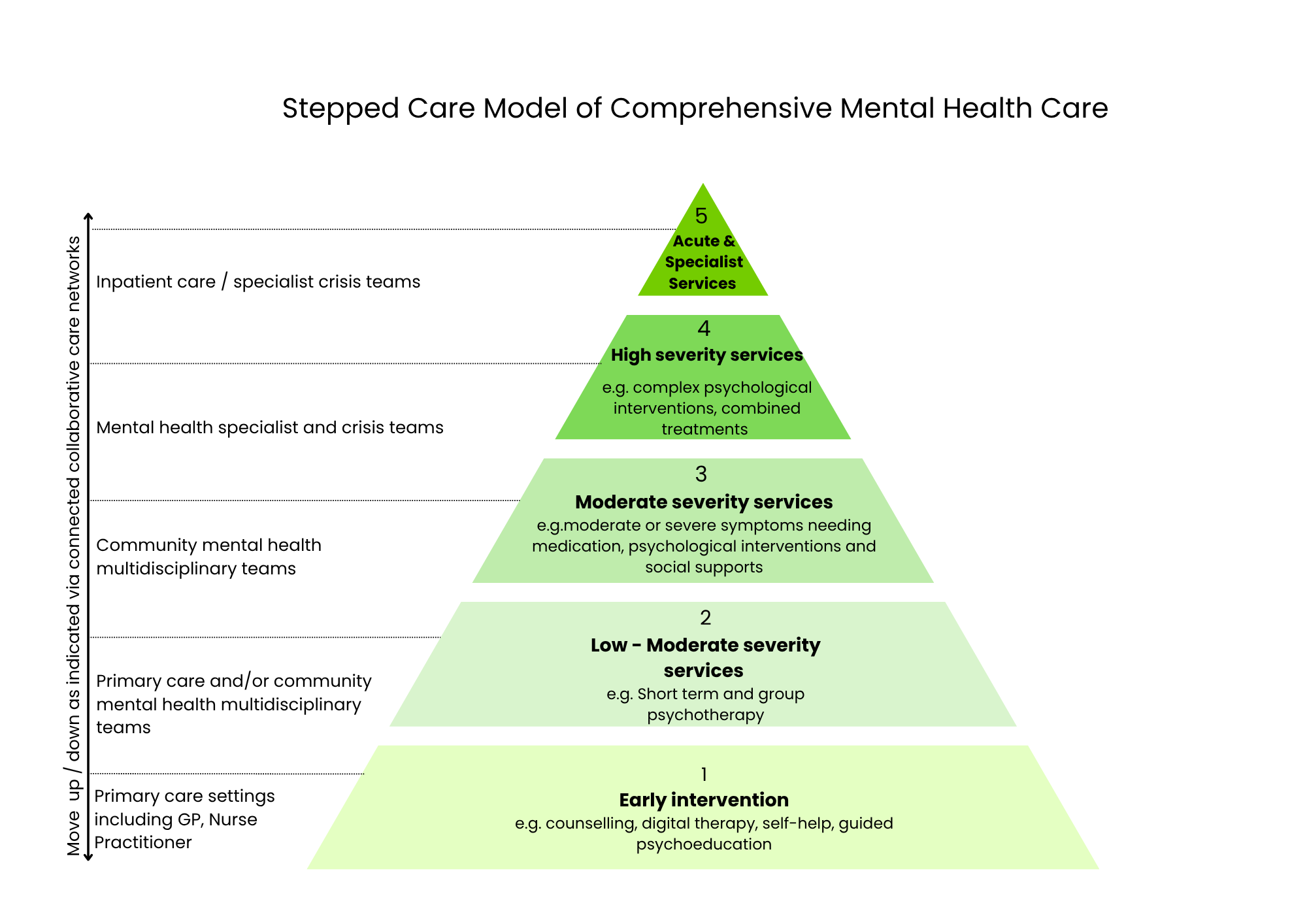
The Stepped Care Model (SCM) provides a structured framework for delivering personalised support that matches individuals' needs.